Sorry I have been MIA for a bit. A couple or three things jump out from the New York Times, NPR and the 'Net this morning.
Firstly, there's an op-ed in the NYT this morning by the country director for the Institute of War and Peace Reporting providing his personal perspective about the bombing of the Serena Hotel in Kabul, a watering hole (and just a place to hole up) for expats, particularly. And there have been other stories about Afghanistan in The Times, on NPR, other places in the last few days. It seemed to hit me; is it a coincidence that the Western Media and Zeitgeist is sitting up and noticing--or should I say acknowledging, since some information has always been around--that Afghanistan is down the tubes because the Taliban, as Mr. McKenzie tells us, have now started a policy of targeting westerners?
The other thing that jumped out at me was from a series that NPR is doing on Muslim Women in Britain.
As I have said umpteen times, until we sit up and notice that the folks who are adopting the niqaab in Britian today are not adopting the traditional ways of Muslims, but something new, we are only going to continue headlong towards the abyss as a planet. After all, does it make any sense to, on the one hand, say that the radicals are a throw-back to medieval times and that "[o]ne meets an increasing number of British Muslim[s]... who are saying … you should go back to the veil, you should go back to our traditional ways" on the one hand and then admit that, for one, the "Hizbut Tahrir's goal is to promote a global Islam, cleansed of all ethnic or cultural traditions." I mean, think about that!
As I have acknowledged before, it is good to see folks (including Muslims, especially in Britain--the US is a generation or so behind in these matters, but what can one do about that? some things just have to run their course) finally engage with the fanatical tendencies within Muslim communities in a more detailed way. But until and unless we all--both outsiders and within the community--stop framing the discussion as, how did Sylvia Poggili put it? being the discussion between people who are "secular" and those who are "devout"; between those who think Sharia is a good idea and those who are against it, we are doomed to have the "Clash of Fundamentalisms" be a self-fulfilling prophecy. Until we start to think about what parts of the Muslim Ideological landscape--like the equivalents in other faith communities and ethnic groups and so on--are the ones from which terrorism and militant, inflexible fanaticism stem and until even us Muslims stop saying this is just about Islam versus the West or that this modern neo-purist strain that is so dominant today is the same as "traditional Islam"--or, worse, The One True, Pure Islam as practised by The Prophet--we're up the wrong creek without a paddle.
And lastly, a shout-out to my peeps, so to speak. There's a clip on Google Video today of an interview with two of Pakistan's most prominent bloggers on an English-language breakfast show. Well worth watching, what with Pakistan in the news in such a big way.
[Original at The Teeth Maestro's blog.]
Cross-posted on the iFaqeer, Wadiblog, ProgressiveIslam.org, and Pak Tea House, blogs.
Technorati tags applicable to this post: Pakistan - Muslims in Britain - Afghanistan - Sylvia Poggioli - Bloggers - Teeth Maestro - Jamash - Hizbut Tahrir - Islamism
Showing posts with label Women and Islam. Show all posts
Showing posts with label Women and Islam. Show all posts
Thursday, January 24, 2008


Thursday, March 08, 2007
Women's Day 2007 - Celebrating (Pakistani/Muslim) Women
This being International Women's Day, it deserves commemoration. So here's something to get the day started right:
 Just a little while ago, today, I stumbled onto an amazing juxtaposition of two of the Pakistani women one can be most proud of: a piece by Asma Jehangir on Mukhtaran Mai, written as part of one of those end-of-the-year series that major magazines do--in this case, the "Asian Heroes" series from 2004.
Mukhtaran Mai, of course, is the Pakistani woman most often celebrated nowadays; the person victimized by a barbaric village council and who went on to both demand justice without regard to the cost to her, and then becoming an active presence for women's issues and rights in Pakistan and for Pakistani and Muslim women as she has travelled abroad and published a memoir/autobiography. Folks will have read reams and reams of copy--and maybe even her book. But for me, the most moving and profound tribute came last year in a personal converstation with Prof. Adil Najam. Paraphrasing from memory here: "I have sat next to and interviewed a Prime Minister, the person acknowledged as one of the greatest poets in our region in the latter half of the Twentieth Century; and Pakistan's only Nobel Laureate. But sitting next to Mukhtaran Mai, I was genuinely impressed. And, even compared to those other folks, proud of her as a Pakistani."
And all this from a poor uneducated villager, one is tempted to say--and folks have often said. But then, that just shows that folks don't really know or understand Pakistani women, women, Pakistanis, or work-a-day Muslims who live in Muslim societies, now doesn't it? But more of that later.
 Asma Jehangir is the kind of person that makes you start a discussion with "If the Nobel Prize was really given purely on merit..." and, in her case, if the Nobel Peace Prize was really given purely on merit, and a woman activist in a Muslim country going up against all odds completely fearlessly again, and again, and then not just stopping there, but stepping onto the world stage to work on the same issues on a global level...well then, why wait till 2003? Anything else might I had the honour of spending some time stuck at Lahore airport with her and Naeem Bokhari back in 1994--and just shooting the breeze. [And this after representing the War Against Rape at a human rights moot held in her offices that very week, and watching her from afar.] Pakistanis--at least those paying attention--don't need to be told the story. Asma Jehangir famously started the first All-Female law practice in Pakistan. Opposition to Gen. Zia's "Hudood Laws" brought her onto the streets, so to speak, and not taking nonsense became her style. She famously turned around a slapped a senior police officer who had yanked her ponytail during one demonstration. She then went on to be one of the leading lights of the Human Rights Commission of Pakistan. (Something Dr. Amartya Sen is very quick to acknowledge when discussing civil society in Pakistan, for example.) She's since gone global and taken on assignments from the UN as "UN Special Rapporteur on Extrajudicial, Arbitrary and Summary Executions" and, since 2004, "United Nations Special Rapporteur on Freedom of Religion or Belief of the Commission on Human Rights since 2004". Oh, and Rani Mukerjee played what is often seen as a fictionalized version of her in a major Bollywood movie.
As I started to say above, even with all the attention focused on Pakistan and Muslims since 2001, these women demonstrate in all they say and do, and in how they say and do it, something no amount of ink--print or electronic--has been able to capture and convey. And that is that one can live in a dictatorship, one can be victimized in the most barbaric way, and yet, even in this day and age, stand up and speak truth to power, demand justice while continuing to have and draw strength from a very strong and personal faith (as Mukhtaran Mai does) and advocate strongly for things like human rights, civil society, and civil rights in the context of, and with respect for, faith, family, tradition, and values.
Today, we celebrate these Pakistani women--and Muslim women, and all women. Especially those not demanding special consideration for who they are, or what they want to do, but who are working for basic dignity and justice for themselves, for other women, and for all us.
PS: And if you want to read more from me on this topic, try this link.
PPS: I cross-posted the above on a couple of sites focused on Muslims, and added the following introductory paragraph:
On International Women's day, on this site, one would think of the Muslim Woman. But when one--anyone, Muslim or non-Muslim--thinks of the Muslim Woman nowadays, what does one think of? Well, not to push the stereotype too far, but it's either the headscarf-wearing (-and-calling-it-hijab), headscarf-pushing person demanding that her conservative values and practices be accepted and given allowances, or the other extreme; that of the memoir-publishing, interview-giving dissident or refusenik. But in all this, the person that I would really like to be heard from more is another kind of Muslim woman: the activist, the human rights lawyer, the person fight back against oppression, and to make the world a better place for all of us--comfortable with her faith, her community, and often her nation; but still being in the forefront of working to make them work better for her co-religionists, her neighbours and her compatriots.
So here [you are]--and of course, I focus on Pakistan, for it is one of the corners of the Muslim world I know best; please do post your own "nominations"!
Technorati tags applicable to this post: Women - International Women's Day - Pakistan - Asma Jehangir - Mukhtaran Mai - Adil Najam
Just a little while ago, today, I stumbled onto an amazing juxtaposition of two of the Pakistani women one can be most proud of: a piece by Asma Jehangir on Mukhtaran Mai, written as part of one of those end-of-the-year series that major magazines do--in this case, the "Asian Heroes" series from 2004.Mukhtaran Mai, of course, is the Pakistani woman most often celebrated nowadays; the person victimized by a barbaric village council and who went on to both demand justice without regard to the cost to her, and then becoming an active presence for women's issues and rights in Pakistan and for Pakistani and Muslim women as she has travelled abroad and published a memoir/autobiography. Folks will have read reams and reams of copy--and maybe even her book. But for me, the most moving and profound tribute came last year in a personal converstation with Prof. Adil Najam. Paraphrasing from memory here: "I have sat next to and interviewed a Prime Minister, the person acknowledged as one of the greatest poets in our region in the latter half of the Twentieth Century; and Pakistan's only Nobel Laureate. But sitting next to Mukhtaran Mai, I was genuinely impressed. And, even compared to those other folks, proud of her as a Pakistani."
And all this from a poor uneducated villager, one is tempted to say--and folks have often said. But then, that just shows that folks don't really know or understand Pakistani women, women, Pakistanis, or work-a-day Muslims who live in Muslim societies, now doesn't it? But more of that later.
Asma Jehangir is the kind of person that makes you start a discussion with "If the Nobel Prize was really given purely on merit..." and, in her case, if the Nobel Peace Prize was really given purely on merit, and a woman activist in a Muslim country going up against all odds completely fearlessly again, and again, and then not just stopping there, but stepping onto the world stage to work on the same issues on a global level...well then, why wait till 2003? Anything else might I had the honour of spending some time stuck at Lahore airport with her and Naeem Bokhari back in 1994--and just shooting the breeze. [And this after representing the War Against Rape at a human rights moot held in her offices that very week, and watching her from afar.] Pakistanis--at least those paying attention--don't need to be told the story. Asma Jehangir famously started the first All-Female law practice in Pakistan. Opposition to Gen. Zia's "Hudood Laws" brought her onto the streets, so to speak, and not taking nonsense became her style. She famously turned around a slapped a senior police officer who had yanked her ponytail during one demonstration. She then went on to be one of the leading lights of the Human Rights Commission of Pakistan. (Something Dr. Amartya Sen is very quick to acknowledge when discussing civil society in Pakistan, for example.) She's since gone global and taken on assignments from the UN as "UN Special Rapporteur on Extrajudicial, Arbitrary and Summary Executions" and, since 2004, "United Nations Special Rapporteur on Freedom of Religion or Belief of the Commission on Human Rights since 2004". Oh, and Rani Mukerjee played what is often seen as a fictionalized version of her in a major Bollywood movie.As I started to say above, even with all the attention focused on Pakistan and Muslims since 2001, these women demonstrate in all they say and do, and in how they say and do it, something no amount of ink--print or electronic--has been able to capture and convey. And that is that one can live in a dictatorship, one can be victimized in the most barbaric way, and yet, even in this day and age, stand up and speak truth to power, demand justice while continuing to have and draw strength from a very strong and personal faith (as Mukhtaran Mai does) and advocate strongly for things like human rights, civil society, and civil rights in the context of, and with respect for, faith, family, tradition, and values.
Today, we celebrate these Pakistani women--and Muslim women, and all women. Especially those not demanding special consideration for who they are, or what they want to do, but who are working for basic dignity and justice for themselves, for other women, and for all us.
PS: And if you want to read more from me on this topic, try this link.
PPS: I cross-posted the above on a couple of sites focused on Muslims, and added the following introductory paragraph:
On International Women's day, on this site, one would think of the Muslim Woman. But when one--anyone, Muslim or non-Muslim--thinks of the Muslim Woman nowadays, what does one think of? Well, not to push the stereotype too far, but it's either the headscarf-wearing (-and-calling-it-hijab), headscarf-pushing person demanding that her conservative values and practices be accepted and given allowances, or the other extreme; that of the memoir-publishing, interview-giving dissident or refusenik. But in all this, the person that I would really like to be heard from more is another kind of Muslim woman: the activist, the human rights lawyer, the person fight back against oppression, and to make the world a better place for all of us--comfortable with her faith, her community, and often her nation; but still being in the forefront of working to make them work better for her co-religionists, her neighbours and her compatriots.
So here [you are]--and of course, I focus on Pakistan, for it is one of the corners of the Muslim world I know best; please do post your own "nominations"!
Technorati tags applicable to this post: Women - International Women's Day - Pakistan - Asma Jehangir - Mukhtaran Mai - Adil Najam
Wednesday, November 29, 2006
Women's Islamic Initiative for Spirituality and Equity -- Follow-Up
I posted a notice about a "Women's Islamic Initiative in Spirituality and Equity" a little while ago. Here are some comments from a couple of attendees.
First the first reaction of Pamela K. Taylor, Chair of the Progressive Muslim Union of North America. Please do read it, even if you aren't a fan of her organization; it is really an interesting comment:
http://www.pktaylor.com/pksblog/2006/11/wise-conference.html
She ends that post with the comment: "It struck me that the Muslim commmunity has put a lot of effort into interfaith dialogue in the past twenty years, maybe we need to start putting a similar effort into intra-faith dialogue...When the Christians started interfaith dialogue, it meant Baptists sitting down with Methodists. Or Protestants sitting down with Catholics. I think the Muslim community really needs similar dialogue."
My comment on that was:
We have an expression in one Muslim community I am part of:
Sau Bismillah!
[which roughly translates to: A hundred times Bismillah--meaning that I can't say say enough times that please you should say a Bismillah and start this! Or something like that.]
She's since posted a follow up:
http://www.pktaylor.com/pksblog/2006/11/more-on-wise-conference.html
The other comment I have found from an attendee is from Farzana Hassan-Shahid, President of the Muslim Canadian Congress. It is here.
Technorati tags applicable to this post: Muslim Women - Women's Islamic Initiative for Spirituality and Equity
Thursday, November 16, 2006
Empowering Muslim Women; A New Global Movement?
The following is billed as an effort to "Launch a Global Movemet to Empower Muslim Women. It is interesting to see that female Muslim leaders with very varied points of view will be represented in this effort, at least as it starts off. I have seen at least one such effort here in the SF Bay Area (on a more focused topic) evolve and ... but let's not pre-judge this effort.
A last note is that while the headline says "empowering Muslim Women", the formal name, again, refers to it as an "Islamic Initiative". Hmmm....meaning what? That this will be Shariah-compliant? Whose interpretation of Shariah? Folks might be familiar with my thoughts on this; if our Muslim brothers and sisters are going to repeatedly identify their efforts as "Islamic", then why the complaint when the "other" side of the Muslim world is also identified as "Islamic Terrorism", or "Islamofascism"? But we digress. Let's see how this effort evolves:
A last note is that while the headline says "empowering Muslim Women", the formal name, again, refers to it as an "Islamic Initiative". Hmmm....meaning what? That this will be Shariah-compliant? Whose interpretation of Shariah? Folks might be familiar with my thoughts on this; if our Muslim brothers and sisters are going to repeatedly identify their efforts as "Islamic", then why the complaint when the "other" side of the Muslim world is also identified as "Islamic Terrorism", or "Islamofascism"? But we digress. Let's see how this effort evolves:
FOR IMMEDIATE RELEASETechnorati tags applicable to this post: Muslim Women
DATE: November 8, 2006
Daisy Khan, Executive Director, ASMA Society New York
P: 212 362 2242 direct; e-mail: daisy@asmasociety.org
Faisal Shah, Press Coordinator, ASMA Society New York
P: 917-492-8690; e-mail: fshah@asmasociety.org
Web Page is here.
PDF is here.
MUSLIM WOMEN LEADERS
LAUNCH GLOBAL MOVEMENT
TO EMPOWER MUSLIM WOMEN
Manhattan, New York - Over one hundred Muslim women religious leaders, human rights activists, scholars and artists from around the world will meet in New York City on November 17th to 19th to launch WISE: The Women's Islamic Initiative in Spirituality and Equity to empower Muslim women to play a greater role in their societies worldwide.
Top leaders will attend, including Baroness Uddin, the first Muslim woman to enter the British House of Lords, Special Adviser to the United Nations Secretary-General Dr. Nafis Sadik, Saudi municipal candidate Fatin Bundagji, Malaysian Islamic Feminist Zainah Anwar, author of Standing Alone in Mecca Asra Nomani," Afghani Presidential candidate Dr. Massouda Jalal, Nigerian advocate in the Amina Lawal stoning case Nogi Imoukhuede, President of Islamic Society of North America Ingrid Mattson, Dubai' Comic Writer Rima Khoreibi who introduced the Muslim World to their first female heroin and Pakistan's Mukhtaran Mai, author of the much anticipated In the Name of
Honor: A Memoir.
"This is a historical and critical event in the history of Islam," said Daisy Khan, Executive Director of The American Society for Muslim Advancement (ASMA), the chief organizer of the event. "WISE will provide a much needed platform for diverse Muslim women to discuss global Muslim
women's issues, assert our rights through the use of and in accordance with Islamic law, and build a coherent movement that empowers and connects Muslim women everywhere."
On the agenda is the formation of an International Shura Council of Muslim Women. A Shura Council is an advisory council that interprets Islamic law for the political and religious leaders in its region of authority. Also under discussion will be the creation of a global fund to provide scholarships for Muslim women to be educated in Islamic jurisprudence thereby qualifying them to serve on the Shura Council of Women.
The leaders will discuss the major obstacles facing Muslim women and create strategies to address them. They will discuss how to increase women's religious & political leadership via faith fueled activism, challenging local customs that impinge on women's rights and develop effective methods
to change negative perceptions about muslim women.
A selection of non-Muslim women faith leaders will also participate in the WISE meetings as supportive partners. They include Sister Joan Chittister, prolific advocate of women's rights and American Benedictine nun, Rev. Dr. Joan Brown Campbell, leader in the ecumenical interfaith movement in the U.S., Dr. Helen LaKelly Hunt, founder of Sister Fund and author of Faith &
Feminism: A Holy Alliance , and Devorah Zlochower, director and instructor of Talmud and halakha, Drisha Institute.
The events of WISE will also feature the theater debut of 7WOMEN, 7HEAVENS, Portraits of Muslim Women, a play that juxtaposes stories of seven Muslim women in abrasive, funny, and soothing dialogue with themselves around personal struggles with faith, community, and relationships. The world premier will take place Saturday, November 18 at 8:30pm during the WISE
conference and is open to the public.
Sponsor: The ASMA Society, a not-for-profit 501(c) 3 founded in 1997 in New York City, is an Islamic cultural and educational organization dedicated to fostering an American-Muslim identity and building bridges between American Muslims and the American public. ASMA's philosophical objective is to strengthen a culturally American expression of Islam based on tolerance and
on cultural and religious harmony and to foster an environment in which Muslims can thrive within a pluralistic society.
Project Collaboration: ASMA Society will collaborate with Cordoba Initiative, a not for profit 501(c) 3 founded in 2004 in Aspen, Colorado. Cordoba Initiative is multi-faith initiative whose objective is to heal the relationship between the Islamic world and America/the West
WISE has been supported by The Ford Foundation, Sister Fund, Henry Luce Foundation, Danny Kaye & Sylvia Kaye Foundation, Rockefeller Brothers Fund, William & Mary Greve Foundation, Marshall Family Fund.
Venue: The Westin New York at Times Square: 270 West 43rd street, NYC, NY 10036
Schedule: Start on November 17th Fri at 5pm and end on November 19th Sun at 5pm
Thursday, May 25, 2006
Muslim Women: Event at Stanford Q&A
Note: This is part of a series of posts about one event. Please see http://ifaqeer.blogspot.com/2006/05/event-with-asifa-qureshi-at-stanford.html for the main page on this discussion.
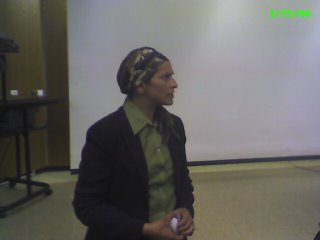
The Q&A Session brought out, among other things:
* What can non-Muslim women do to help?
Her answer was that it is a matter of humility and respect--and a LOT of listening. And then identifying where it is that an American voice can help. And where it is detrimental.
* In a lot of cases, the issue is that a lot of Western feminists can't accept the very existence of laws based on a religion. Don't we need to have the conversation about that simple fact?
Her reply to this was that yes. But it has to be done with respect on both sides.
* A question about evidence that the thinking of the schools of thought has continued and is alive today.
She admirably explained the movement, starting in the late 18th and 19th centuries against the schools of thought as being the reason of the community's stagnation and some people arguing back. She said that she believes that Ijtihad was always alive in on form or the other.
* Should Muslim women get involved in Western Feminist organizations?
Yeah, sure, absolutely, she said. That is very much a part of the process of learning from each other that needs to happen.
* Should Muslim women be part of the Ijtihad of Hijab?
Yes. There always have been. She says that there were Women Muftis--going all the way back.
* How do we break down the impressions that people who cover and who don't have of each other--within the community?
Her reply, very simply delivered was that we need to stop judging people by how they look. And we need to do that as Americans, too.
* I then raised the question of about how do we counter the extreme reactions to any uncomfortable voices that arise in the community, as was evidence by the reaction to the mention of her lecture on our local Bay Area Muslim list. And said some more things. I couldn't type while I was speaking. [:D]
Quite simply, she said that's a very large conversation and needs to happen.
* And then the last question asked the question about her position on women leading prayer.
Her reply, quite simply was that she has not researched the issue. But that she's not against anyone asking that question. If you ask me, that's a position in itself. But that might just be me.
That's it for now; I need to go and mingle. Drop comments and let's talk!
Technorati tags applicable to this post: Muslim Women - Asifa Qureshi - Feminism and Islam - Muslim Feminists - Islam
Muslim Women: Event at Stanford Part 2
Note: This is part of a series of posts about one event. Please see http://ifaqeer.blogspot.com/2006/05/event-with-asifa-qureshi-at-stanford.html for the main page on this discussion.
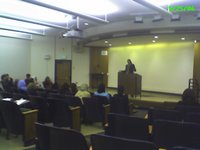
Because of her paper on Pakistani rape laws, she got asked to help with the case of Baria Mughazu (need to check that name). One of the four schools of thought in Sunni Islam accepts pregnancy as enough proof of zina. Apparently the governor of Zamfara said that he would not listen to any more Western critique, but if anyone came up with an Islamic argument he would listen. So, as she puts it, "a loosely affiliated Internet group" (NPM, I guess) approached her to write the brief. Before she could finish it, the governor moved up the punishment--apparently because of the pressure on the governor.
She goes on to say that in a similar case, in Pakistan, a woman was acquitted, with a Sharia court saying clearly that pregnancy was not enough proof.
She then discusses the very important distinction between being against the Hudood laws themselves, for example, and pointing out the misuse of Islamic law to the detriment of women, specifically. This, she says, is an insult to Islam.
On Mukhtaran Mai's case, she points out that the tribunal that meted out the "punishment" to her was not an Islamic court, but a tribal tribunal. In fact, her local Imam was the one that told the family to prosecute--and condemned the crime from the Friday pulpit.
She says that it is important to cover the history of colonialism and suchlike to understand why we are where we are today. Quotes Leila Ahmed (author of a book titled "Colonialism, Women and Islam" or something close to that) who says that a lot of the argument /rationale for colonialism was the state of women in colonized societies. And she says that that rhetoric, where feminist logic was co-opted to justify colonialsm, is still in the minds of Western feminists. This leads to Muslims equating any talk of women's rights with colonialism and for feminists to say anything that gets through to formerly (and, arguably, still) colonized societies.
All this has prevented Muslims from making their own conclusions on women's issues. And all this leads to women in Muslim societies thinking that these Westerners should just get out of the way. And things like veils, and scarves become the most important issue.
So she talks about this. The point she's raising is that in this discussion that the reasons that women adopt dress. [And lists reasons. You can look them up. :D] And then raises the issue of the hypocrisy of Western feminists who stand with people who don't want to wear stuff, but then not with those being physically prevented from wearing it. She also raised the issue of the discussion going on within the Muslim community and says that outsiders don't understand that there's a conversation happening within the community. People outside the community ignoring that there might be genuine reasons to veil; but on th other hand within the community, there is the tendency to ignore that there might be very well-informed Muslims that chose not to with a very Islamicly attitude.
So, instead of prioritizing the issue of veils and suchlike, what might have happen if these issue were not at the top of the agenda? She raises religioius education not just as a source of empowerment, but authority is ignored. For example, stressing the Islamic injunction for women to get an education might be a good way to do work that has richochet effect on other issues. Public knowledge disemination, with things like Muslim marriage contracts, rights, and other symbols.
It is very difficult for feminists to engage with thi conversation.
Her conclusion is that it would be better if both sides were working together (the Western feminists and women in Muslim societies). But it is very difficult for this to happen as long as the whole issue is framed with the attitude that Islam is what needs to be removed from the equation. People want to help Muslim women, but there is no respect whatsoever for the deep, deep faith of these people--a faith that often helps them overcome great odds. As in the case of Mukhtaran Mai.
There has to be a broader appreciation of what we are all working for and what we're working with.
[One item that got left out in my notes is something the Prof. Qureshi used to illustrate a few points along the way: The attitude of a lot of Muslim governments--and Muslims--on the Beijing Conference on women's rights was that it was an attack on Islam. Governments like the Saudi one boycotted it. And there were people there who went specifically just with the sole idea of "defending Islam". On the other hand, she related an incident of an Saudi woman wearing a veil--and some of these women wore the veil, amongst other reasons, because they wanted some anonymity precisely because of the attitude of their government--having a Westerner heckle her with a "Liberate yourself!" just passing her on the street. The speaker brought this up as an example of people talking past each other.]
This was followed by an energetic Q&A session. See the next post
Technorati tags applicable to this post: Muslim Women - Asifa Qureshi - Feminism and Islam - Muslim Feminists - Islam
Muslim Women: Event at Stanford
Note: This is part of a series of posts about one event. Please see http://ifaqeer.blogspot.com/2006/05/event-with-asifa-qureshi-at-stanford.html for the main page on this discussion.

I am writing this at an event at Stanford University. It features a young scholar named "Asifa Qureshi", who is now at the University of Wisconsin, but who, I am told, grew up in the San Francisco Bay Area herself and was, for example, a co-founder of AMILA and graduated from Berkeley. She got her law degree from UC Davis and has an LLM from Columbia. She's curently at Harvard pursuing a LJD.
I am have been meaning to attend more events at Stanford, especially in my areas of interest, and am only now starting to fulfill that aspiration. This event jumped out at me as a "must-see" because the speaker worked on the brief for Baria Mughazu, a woman sentenced to flogging in Zamfara State, in my childhood home in Nigeria and at the same time has to her credit a piece critiquing Zina laws in Pakistan from an Islamic perspective.
To pique my interest further, when the event was posted on our local mailing list for Muslims in Silicon Valley, someone raised the question of whether she was another of "those" people. Especially since the first picture to be found on the Internet was one in which she appears with Aminah Wudud, who led the most public and publicized instance of a woman leading people in prayer. Someone on the list then pointed out her very solid background as a youngster who grew up in the Bay Area Muslim community.
The topic of the event was "Western Advocacy for Muslim Women: It's Not Just the Thought that Counts".
She points out that the issue she's talking about is not coming from ill intentions. The people trying to help women in the places she's talking about do it from very sincere motives. She brings up a "Rescue Mentality" in the Western (not just American) context. Something with a long history.
She starts with the issue of Abortion and the issue of Islamic law and tradition not having the problem of it being a life in the first trimester. And the way the issue is framed by Western activists, and the assumption that Islam is part of the problem. She goes on to the discussion of Zina laws in Pakistan. Zina is a crime in the Qur'an, but there are very strict standards for witnesses--four are required. When the laws were written under Zia in Pakistan, they included rape under the definition of Zina and therefore put the requirement of four witnesses on rape. She looked into whether this was what Islamic law says and then wrote a paper saying that this was wrong--rape is not a category of Zina, but a whole other, very very serious crime. Her point is that there are different tones necessary for the different audiences. She read the two versions of the introduction to the above paper; on for an American journal and for a Pakistani one.
... more in the next post. I don't want to lose work...
Technorati tags applicable to this post: Muslim Women - Asifa Qureshi - Feminism and Islam - Muslim Feminists - Islam
Tuesday, March 07, 2006
Strong Muslim Women
This has come up several times in just the last few days. Especially because the emphasis in the discussion about morals and religion turns to women and segregating them. One story someone forwarded today mentioned there being bearded "designated chaperones" being part of meetings between the two genders...in New York City.
The point is this:
The very first convert to Islam was an independent, professional woman. And independent, professional woman who ran a tradiing business and had no problem proposing to and marrying a person who happened to be her employee.
And The Prophet of Islam had no problem working for that independent, professional woman. And no problem marrying a woman who was independent enough to be the one to propose marriage.
That's the religion as I know it.
And what my family has practised. My mother was founding head of the "Women Arabic Teacher's College" in what is now the capital of the first state in Nigeria to "adopt Sharia" as state law. She later founded and ran a primary school of her own in one of Karachi's, shall we say, less privileged neighbouroods. And with a degree in Islamic History and a very strong and traditional faith, she is often in arguments with Maududists in the family about, for example, their trying to stop the music at weddings.
That's the strong Muslim woman I learnt the religion from.
PS, March 8: Happy Women's Day!
Technorati tags applicable to this post: Women in Islam - Islam - Women
Saturday, June 25, 2005
Women in Mosques -- Episode II
Over the last couple of days has come the announcement by first CAIR, and then ISNA on an intitiative towards "Women-Friendly Mosques". My first reaction yesterday was to say positive things about the initiative being taken. I did this because I was sure I or someone else would much to critique in it when we read it through. And Shahed Amanullah (editor of Alt.Muslim, and one of the leaders in the AMILA community) has the needful in a way that means anything I would write would be reinventing the wheel:
http://www.pmuna.org/archives/2005/06/pmu_response_to.php
And from Dr. Muqtedar Khan comes his own interesting analysis:
"Women-Friendly Mosques" Document Leaves Unanswered QuestionsAnd this is becoming quite a dialog. The Progressive Muslim Union, an organization whose advocacy has no doubt been a large part of what set off this whole chain of events, has put out a statement. They welcome the step while expressing the opinion that this is a first step in a longer journey:
The "women-friendly mosques" document allows male-run mosques to obey the letter of the law without significantly improving the situation of women in US mosques today....
By Shahed Amanullah, June 24, 2005
http://www.altmuslim.com/perm.php?id=1480_0_25_0_C
http://www.pmuna.org/archives/2005/06/pmu_response_to.php
And from Dr. Muqtedar Khan comes his own interesting analysis:
"CAIR has announced that it will distribute a “Women Friendly Mosques” Brochure. This document is perhaps the most enlightened statement that CAIR has ever issued in its eleven-year history. This is a good beginning for their new Chairman, Dr. Parvez Ahmad. I hope that this document is a promise of more progressive thinking to come from CAIR. The document is meekly titled as a brochure when in fact it is a document that clearly lays down a new mosque policy for American Muslims. To read more click here... http://www.ijtihad.org/women-mosque-policy.htm"A couple comments on specific things in his piece:
- Dr Khan observes that "Now even CAIR is a progressive Muslim voice..." I wonder; does that then make them Neo-Con dupes, too, like the other groups carrying the "progressive" message have been accused of being (not by Dr. Khan, of course) ? Sorry; I couldn't resist that joke. Or is it a joke?
- And he makes another very interesting observatino: "It is a bit disturbing that more Muslims organizations endorsed John Kerry than this brochure." Food for thought.
Wednesday, June 22, 2005
Women in Mosques--CAIR Takes Up the Issue
The following came over the wires yesterday. Today, ISNA has announced a parallel initiative:
> In the Name of God, the Compassionate, the Merciful
>
> FOR IMMEDIATE RELEASE
>
> CAIR TO DISTRIBUTE `WOMEN FRIENDLY MOSQUES' BROCHURE
> Publication designed to educate U.S. Muslim leaders on women's rights
>
> (WASHINGTON, D.C., 6/22/05) - A prominent national Islamic civil
> rights and advocacy group said today it plans to distribute a
> brochure supporting the religious rights of Muslim women to mosques
> throughout the United States.
More at: http://www.cair-net.org/default.asp?Page=articleView&id=37017&theType=NB
Without going into some of the nuances and before we start picking nits, let me see if I can say this right:
This is a good thing to have happened. Kudos to CAIR and the authors of the report for doing this. If results is what one cares about, this a step in the right direction for the community--and I am referring to Muslims in North America in particular and the Ummah in general.
Whatever we say about each other, an opinion leaders (like ISNA, CAIR, et al) has taken what I think can safely be characterized as a progressive step. From where I sit, the Progressive side of the community has played at least the role of a catalyst. Congratulations are in order, I think, to the whole community.
Friday, May 06, 2005
Islamofeminism
One keeps hearing the word "Islamofacism". One person that uses it is Reporter Steven Vincent on his time in Iraq his is "The Red Zone."...in his interview with Sandip Roy on Upfront ("dispatches from the new majority", a program on KALW), he expresses surprise at finding Muslim women that see the Qur'an as a means of getting their rights. Now that is a strong reminder that there is definitely a disconnect between people in this world—at times, we really don't know much about each other.
Also, listening to that, the word "Islamofeminism" popped into my head
Secondly, he makes some other points and provides some very good insights. And this is a guy that self-idenfies as a Neo-Con. (He says to the left "Where are you? Don't leave this work [of understanding the Iraqis and helping them build their country, I guess] to Neo-Cons like me!) Worth listening to. I'll see what links to events, radio programs I can find featuring him and put them here.
Subscribe to:
Posts (Atom)