The New York Times covers the attempted change (what else can I call it?) in Pakistani Rape Laws (part of what is known as the "Hudood Laws"):
Pakistan Moves Toward Altering Rape Law, New York Times, November 16, 2006
I haven't read it yet, so can't comment on it, but I'd like to point folks back the post on this blog from yesterday where I'd like to start a discussion on the laws:
http://ifaqeer.blogspot.com/2006/11/pakistan-reforms-rape-laws.html
Technorati tags applicable to this post: Hudood Laws - Pakistan's Rape Laws - Pakistan - Enlightened Moderation - Musharraf
Showing posts sorted by relevance for query rape laws. Sort by date Show all posts
Showing posts sorted by relevance for query rape laws. Sort by date Show all posts
Thursday, November 16, 2006


Wednesday, November 15, 2006
Pakistan Reforms Rape Laws?
This just in; while people like me, who do not accept Gen. Zia's "Islamization" as being a valid implementation of Sharia (Zakat on 2000 rupees in your checking account?!!) and therefore cringe at characterization of laws he put in place as "strict Sharia laws", this article provides a general outline. Can can anyone throw any light on the details?
Pakistan votes to amend rape lawsTechnorati tags applicable to this post: Hudood Laws - Pakistan's Rape Laws - Pakistan - Enlightened Moderation - Musharraf
Pakistan's national assembly has voted to amend the country's strict Sharia laws on rape and adultery.
Until now rape cases were dealt with in Sharia courts. Victims had to have four male witnesses to the crime - if not they faced prosecution for adultery.
Now civil courts will be able to try rape cases, assuming the upper house and the president ratify the move...
More at http://news.bbc.co.uk/2/hi/south_asia/6148590.stm
Friday, November 17, 2006
Pakistani Activists React to Change in Rape Laws (Hudood Laws)
The following is a statement from an organization that's done a lot of very interesting work over the last couple of years or so. A necessary reference point in the discussion. And even if you dismiss them as excitable expats, the Aurat Foundation and Sungi are not names to sneeze at, being very respected social voices from "on the ground" in Pakistan--the latter, for example, being one of the most important groups working on the ground in the aftermath of the quake last year.:

Politics in the name of Women
ANAA stands with its civil society partners, Aurat Foundation, Sungi and many others in expressing their opposition to the Women's Protection Bill (WPB). The Bill is being wrongfully used by the Government of Pakistan to gain political mileage in the guise of championing women's rights. Our opposition to the Bill is based on the following reasons:
Technorati tags applicable to this post: Hudood Laws - Pakistan's Rape Laws - Pakistan - Enlightened Moderation - Musharraf
Politics in the name of Women
ANAA stands with its civil society partners, Aurat Foundation, Sungi and many others in expressing their opposition to the Women's Protection Bill (WPB). The Bill is being wrongfully used by the Government of Pakistan to gain political mileage in the guise of championing women's rights. Our opposition to the Bill is based on the following reasons:
- The reason ANAA supported the prosecution of rape under the Pakistan Penal Code instead of the Sharia Courts was because the former has never historically prosecuted the crimes of adultery and fornication. This basic difference has been eliminated by introducing the new crime of "lewdness" into the Pakistan Penal Code.
- The Amended Women's Protection Bill actually introduces a new crime under Section 496B of the Pakistan Penal Code. This new crime entitled "lewdness" would punish anyone engaging in consensual sexual relations outside of a marital relationship. Absent evidentiary requirements, the creation of this new crime now creates new opportunities in which citizens merely accused of "sexual relations outside marriage" can be thrown in jail and face a five year prison sentence as well as !0,000 rupee fine.
- While the new Bill allows rape cases to be tried under the Pakistan Penal Code and removes the supposed evidentiary requirement of providing four adult male witnesses, the creation of the new crime of "lewdness" under the PPC effectively eliminates any cumulative gains.
- Ultimately, the new bill uses the already confusing mixture of Sharia and Civil law effective in Pakistan to achieve political gains while ignoring the reality that under the new legal regime private citizens face prison charges for mere accusations of sexual impropriety.
- The Bill does not repeal the entire Hudood Ordinance which has been the demand of ANAA as well as all other civil society and human rights organizations in Pakistan. In doing so, the Bill fails to follow the recommendations of the National Council of Women or the Council of Islamic Ideology which have both recommended a complete repeal of the Bill.
Technorati tags applicable to this post: Hudood Laws - Pakistan's Rape Laws - Pakistan - Enlightened Moderation - Musharraf
Thursday, November 16, 2006
Pakistanis Talk about the Pakistani Rape Laws
Folks interested in the issue would do well to read this. It has a detailed description of the process--and has a discussion taking place between Pakistanis with different points of view--and some others stopping by.
http://pakistaniat.com/2006/11/16/pakistan-women-rights-bill/
Technorati tags applicable to this post: Hudood Laws - Pakistan's Rape Laws - Pakistan - Enlightened Moderation - Musharraf
http://pakistaniat.com/2006/11/16/pakistan-women-rights-bill/
Technorati tags applicable to this post: Hudood Laws - Pakistan's Rape Laws - Pakistan - Enlightened Moderation - Musharraf
Thursday, May 25, 2006
Muslim Women: Event at Stanford
Note: This is part of a series of posts about one event. Please see http://ifaqeer.blogspot.com/2006/05/event-with-asifa-qureshi-at-stanford.html for the main page on this discussion.

I am writing this at an event at Stanford University. It features a young scholar named "Asifa Qureshi", who is now at the University of Wisconsin, but who, I am told, grew up in the San Francisco Bay Area herself and was, for example, a co-founder of AMILA and graduated from Berkeley. She got her law degree from UC Davis and has an LLM from Columbia. She's curently at Harvard pursuing a LJD.
I am have been meaning to attend more events at Stanford, especially in my areas of interest, and am only now starting to fulfill that aspiration. This event jumped out at me as a "must-see" because the speaker worked on the brief for Baria Mughazu, a woman sentenced to flogging in Zamfara State, in my childhood home in Nigeria and at the same time has to her credit a piece critiquing Zina laws in Pakistan from an Islamic perspective.
To pique my interest further, when the event was posted on our local mailing list for Muslims in Silicon Valley, someone raised the question of whether she was another of "those" people. Especially since the first picture to be found on the Internet was one in which she appears with Aminah Wudud, who led the most public and publicized instance of a woman leading people in prayer. Someone on the list then pointed out her very solid background as a youngster who grew up in the Bay Area Muslim community.
The topic of the event was "Western Advocacy for Muslim Women: It's Not Just the Thought that Counts".
She points out that the issue she's talking about is not coming from ill intentions. The people trying to help women in the places she's talking about do it from very sincere motives. She brings up a "Rescue Mentality" in the Western (not just American) context. Something with a long history.
She starts with the issue of Abortion and the issue of Islamic law and tradition not having the problem of it being a life in the first trimester. And the way the issue is framed by Western activists, and the assumption that Islam is part of the problem. She goes on to the discussion of Zina laws in Pakistan. Zina is a crime in the Qur'an, but there are very strict standards for witnesses--four are required. When the laws were written under Zia in Pakistan, they included rape under the definition of Zina and therefore put the requirement of four witnesses on rape. She looked into whether this was what Islamic law says and then wrote a paper saying that this was wrong--rape is not a category of Zina, but a whole other, very very serious crime. Her point is that there are different tones necessary for the different audiences. She read the two versions of the introduction to the above paper; on for an American journal and for a Pakistani one.
... more in the next post. I don't want to lose work...
Technorati tags applicable to this post: Muslim Women - Asifa Qureshi - Feminism and Islam - Muslim Feminists - Islam
Muslim Women: Event at Stanford Part 2
Note: This is part of a series of posts about one event. Please see http://ifaqeer.blogspot.com/2006/05/event-with-asifa-qureshi-at-stanford.html for the main page on this discussion.
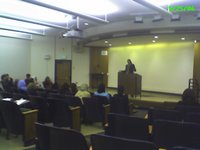
Because of her paper on Pakistani rape laws, she got asked to help with the case of Baria Mughazu (need to check that name). One of the four schools of thought in Sunni Islam accepts pregnancy as enough proof of zina. Apparently the governor of Zamfara said that he would not listen to any more Western critique, but if anyone came up with an Islamic argument he would listen. So, as she puts it, "a loosely affiliated Internet group" (NPM, I guess) approached her to write the brief. Before she could finish it, the governor moved up the punishment--apparently because of the pressure on the governor.
She goes on to say that in a similar case, in Pakistan, a woman was acquitted, with a Sharia court saying clearly that pregnancy was not enough proof.
She then discusses the very important distinction between being against the Hudood laws themselves, for example, and pointing out the misuse of Islamic law to the detriment of women, specifically. This, she says, is an insult to Islam.
On Mukhtaran Mai's case, she points out that the tribunal that meted out the "punishment" to her was not an Islamic court, but a tribal tribunal. In fact, her local Imam was the one that told the family to prosecute--and condemned the crime from the Friday pulpit.
She says that it is important to cover the history of colonialism and suchlike to understand why we are where we are today. Quotes Leila Ahmed (author of a book titled "Colonialism, Women and Islam" or something close to that) who says that a lot of the argument /rationale for colonialism was the state of women in colonized societies. And she says that that rhetoric, where feminist logic was co-opted to justify colonialsm, is still in the minds of Western feminists. This leads to Muslims equating any talk of women's rights with colonialism and for feminists to say anything that gets through to formerly (and, arguably, still) colonized societies.
All this has prevented Muslims from making their own conclusions on women's issues. And all this leads to women in Muslim societies thinking that these Westerners should just get out of the way. And things like veils, and scarves become the most important issue.
So she talks about this. The point she's raising is that in this discussion that the reasons that women adopt dress. [And lists reasons. You can look them up. :D] And then raises the issue of the hypocrisy of Western feminists who stand with people who don't want to wear stuff, but then not with those being physically prevented from wearing it. She also raised the issue of the discussion going on within the Muslim community and says that outsiders don't understand that there's a conversation happening within the community. People outside the community ignoring that there might be genuine reasons to veil; but on th other hand within the community, there is the tendency to ignore that there might be very well-informed Muslims that chose not to with a very Islamicly attitude.
So, instead of prioritizing the issue of veils and suchlike, what might have happen if these issue were not at the top of the agenda? She raises religioius education not just as a source of empowerment, but authority is ignored. For example, stressing the Islamic injunction for women to get an education might be a good way to do work that has richochet effect on other issues. Public knowledge disemination, with things like Muslim marriage contracts, rights, and other symbols.
It is very difficult for feminists to engage with thi conversation.
Her conclusion is that it would be better if both sides were working together (the Western feminists and women in Muslim societies). But it is very difficult for this to happen as long as the whole issue is framed with the attitude that Islam is what needs to be removed from the equation. People want to help Muslim women, but there is no respect whatsoever for the deep, deep faith of these people--a faith that often helps them overcome great odds. As in the case of Mukhtaran Mai.
There has to be a broader appreciation of what we are all working for and what we're working with.
[One item that got left out in my notes is something the Prof. Qureshi used to illustrate a few points along the way: The attitude of a lot of Muslim governments--and Muslims--on the Beijing Conference on women's rights was that it was an attack on Islam. Governments like the Saudi one boycotted it. And there were people there who went specifically just with the sole idea of "defending Islam". On the other hand, she related an incident of an Saudi woman wearing a veil--and some of these women wore the veil, amongst other reasons, because they wanted some anonymity precisely because of the attitude of their government--having a Westerner heckle her with a "Liberate yourself!" just passing her on the street. The speaker brought this up as an example of people talking past each other.]
This was followed by an energetic Q&A session. See the next post
Technorati tags applicable to this post: Muslim Women - Asifa Qureshi - Feminism and Islam - Muslim Feminists - Islam
Wednesday, February 23, 2005
War, Crimes, Rape, Honor and Being "Pure"
Published online in Al-Mizaan, February 23, 2005.
"War is coming to Balochistan," says Ali Ahsan Halai.
Now, even most Pakistani readers will not know that name. Ali Ahsan is a Pakistani journalist who was writing in this month's Herald, the older of the two major English monthlies in Pakistan. So why should anyone besides Balochis, or Pakistanis in general, care?
Balochistan is a province of the Islamic Republic of Pakistan. And Pakistan is the seventh largest nation in the world. And, depending on how you look at it and who you believe, Pakistan is also the 2nd or 3rd most populous Muslim nation in the world. Oh, and did I mention it is the only Muslim nation with nuclear weapons?
As for Balochistan, well, amongst other things, Balochistan borders Afghanistan. Balochistan is where China is helping Pakistan build a second warm water port. This is the point at which a pipeline from Central Asia would most probably bring natural gas to be shipped to the rest of the world. Oh, and did I mention that it straddles the border with the Islamic Republic of Iran?
So, to this wonderfully strategic point on the world map, Mr. Halai tells us, war is coming. Why, you ask? Well here's the view of a prince of the people, so to speak, the son of a major Baloch leader:
http://news.bbc.co.uk/2/hi/south_asia/4243129.stm
And to pick up the theme of what is happening in this current conflagration in Balochistan, here's how Herald's lead story starts:
But is that the whole story? There's an angle that caught my eye. But first, a couple of words by way of background. Readers that are familiar with happenings in Pakistan will know that there are laws currently in force in that country that, to put is simply, set up a Catch 22 situation: A person alleging rape has to produce 4 witnesses to the act. And if she (and as far as I know, it has always been a she) cannot prove that the act of adultery (zina) was under duress (bil jabar), the admission of having been involved in zina (or being pregnant outside wedlock) leads to a conviction for that act. All this in the name of religion and God.
Overlay on this a country of 150 million with a society that is in large parts still feudal--and I do mean that word in it's literal, historical meaning--and where "honor" is a big factor, and you have the fact that Balochistan is the province that brought the concept of "karo kari", or "honor killing" into our news bulletins and our everyday conversation. Saying any more about that topic would be restating reams and reams of the obvious, serving only to make any self-respecting human rights activist froth at the mouth. And if you have a single feminist bone in your body, then God help you.
So what's the angle I was talking about? What's my point? Well, read the following; it's a short story from the news site of a Pakistani 24-hour news channel:
"War is coming to Balochistan," says Ali Ahsan Halai.
Now, even most Pakistani readers will not know that name. Ali Ahsan is a Pakistani journalist who was writing in this month's Herald, the older of the two major English monthlies in Pakistan. So why should anyone besides Balochis, or Pakistanis in general, care?
Balochistan is a province of the Islamic Republic of Pakistan. And Pakistan is the seventh largest nation in the world. And, depending on how you look at it and who you believe, Pakistan is also the 2nd or 3rd most populous Muslim nation in the world. Oh, and did I mention it is the only Muslim nation with nuclear weapons?
As for Balochistan, well, amongst other things, Balochistan borders Afghanistan. Balochistan is where China is helping Pakistan build a second warm water port. This is the point at which a pipeline from Central Asia would most probably bring natural gas to be shipped to the rest of the world. Oh, and did I mention that it straddles the border with the Islamic Republic of Iran?
So, to this wonderfully strategic point on the world map, Mr. Halai tells us, war is coming. Why, you ask? Well here's the view of a prince of the people, so to speak, the son of a major Baloch leader:
http://news.bbc.co.uk/2/hi/south_asia/4243129.stm
And to pick up the theme of what is happening in this current conflagration in Balochistan, here's how Herald's lead story starts:
Battlefront SUISo, in a lot of ways, it is the same story that has played out since time immemorial, one of...how does that quaint old document from the 18th century read? "... a long train of abuses and usurpations..." Whether the litany of abuse and usurpation is real, or perceived, in my humble opinion, doesn't really matter; when a nation or people feel that they have been abused and their rights and resources usurped, then, to them, that is their reality. And the government cover up hurts more than the offense.
By Syed Shoaib Hasan
It was a "chhoti si baat" or a minor matter, as Inter-Services Public Relations spokesman Major General Shaukat Sultan put it on television. But the Baloch saw it as an affront to their honour which, in the words of Bugti chief and nationalist leader Nawab Akbar Khan Bugti "must be avenged at all costs." Despite such widely divergent views, the rape of Dr Shazia Khalid of Pakistan Petroleum Limited (PPL) brought the Pakistan Army into a dangerous confrontation with the Baloch nationalists that threatens to destabilise the whole country.
Dr Khalid was raped in the confines of the maximum-security Sui gas refinery compound on the night between January 2 and 3, allegedly by four persons including an army captain belonging to the Defence Security Guards (DSG). The incident itself did not rankle as much as the subsequent cover-up by the military authorities and the PPL management, who tried to paint the event as a robbery and prevented police officials from meeting the victim. When the tribesmen reacted, the government responded by turning on the heat on the nationalists instead of arresting the suspects. Although there have been attempts by the political forces to broker a truce, the two sides have stuck to their positions, thereby turning Dera Bugti into a virtual battle zone....
But is that the whole story? There's an angle that caught my eye. But first, a couple of words by way of background. Readers that are familiar with happenings in Pakistan will know that there are laws currently in force in that country that, to put is simply, set up a Catch 22 situation: A person alleging rape has to produce 4 witnesses to the act. And if she (and as far as I know, it has always been a she) cannot prove that the act of adultery (zina) was under duress (bil jabar), the admission of having been involved in zina (or being pregnant outside wedlock) leads to a conviction for that act. All this in the name of religion and God.
Overlay on this a country of 150 million with a society that is in large parts still feudal--and I do mean that word in it's literal, historical meaning--and where "honor" is a big factor, and you have the fact that Balochistan is the province that brought the concept of "karo kari", or "honor killing" into our news bulletins and our everyday conversation. Saying any more about that topic would be restating reams and reams of the obvious, serving only to make any self-respecting human rights activist froth at the mouth. And if you have a single feminist bone in your body, then God help you.
So what's the angle I was talking about? What's my point? Well, read the following; it's a short story from the news site of a Pakistani 24-hour news channel:
Rape suspect influential: BugtiWhat we have is one of the last absolute feudal lords on the face of the earth (again, as I said, in the classic sense of the word) going on the record as saying that a rape victim is "Pak", or pure. And call me a hopeless sentimentalist, but that can't be a small matter in Pakistan, The Land of the Pure...
http://www.geo.tv/main_files/pick_prog.cfm?page=pakistan.aspx&id=63983
DERA BUGTI: Tribal chief Nawab Akbar Bugti claimed on Tuesday that the accused of raping a female doctor in Sui has not been arrested because he has influential and brother of a DCO in Punjab. Speaking to journalists at Dera Bugti, Akbar Bugti said tribesmen were being threatened with military action if they did not give up their protests at the alleged gangrape.
“But this is not possible,” he added. Akbar Bugti said the female doctor was not a “kari” but the victim of a heinous crime. He said tribals considered her to be “pure”.
Tuesday, May 23, 2006
Asifa Qureshi Event Invitation
Note: This is part of a series of posts about one event. Please see http://ifaqeer.blogspot.com/2006/05/event-with-asifa-qureshi-at-stanford.html for the main page on this discussion.
Here's what I posted to local Muslim lists and a few other activists lists I am asking about Prof. Qureshi when I first heard about the event below.
Here's what I posted to local Muslim lists and a few other activists lists I am asking about Prof. Qureshi when I first heard about the event below.
I am not familiar with this name--which is most probably my own shortcoming, because she seems to be working on issues related to both the country I was born in and the one I am a citizen of (Pakistan and Nigeria--I have lived in what is now the capital of Zamfara State).
Does anyone else have a take on this scholar?
I think I will try to make it to the event. From the profile, it seems, at least at first blush, like she's coming from a perspective
that we don't see very often--that of an "Islamic" critique of what is currently passing for "Islamism"--and need so sorely.
iF/SIA.
<-----Original Message----->
>
>Western Advocacy for Muslim Women:
>It's Not Just the Thought that Counts
>with Professor Asifa Quraishi
>
>http://issu.chafi.us/?q=node/84
>
>Thursday, May 25th, 7PM
>Jordan Hall
>Building 420, Room 41 (Lower Level - Psychology Department)
>Stanford University, Palo Alto, CA
>
>Drawing on her experiences working on Islamic law relating to women and
>resulting encounters with transnational feminist work, Asifa Quraishi explains
>how some efforts by well-intentioned non-Muslim feminist groups have the
>unintended consequences that actually end up hurting the Muslim women they seek
>to help. Examples will include stories from the 1995 Beijing UN World
>Conference on Women, recent criminal prosecutions of adultery cases in Nigeria
>and Pakistan, and the general nature of feminist discourses in Muslim and
>non-Muslim circles.
>
>Presented by:
>Islamic Society of Stanford University
>http://issu.chafi.us/
>
>Directions to Jordan Hall:
>http://theory.stanford.edu/~aflb/directions-jordan.html
>http://campus-map.stanford.edu/index.cfm?ID=01-420
>
>Questions:
>Salman Latif - slatif@stanford.edu
>
>
>x-x-x-x-x
>
>Asifa Quraishi
>Assistant Professor of Law
>University of Wisconsin Law School
>
>Degrees
>LL.M., Columbia Law School
>J.D., University of California-Davis
>B.A., University of California-Berkeley
>
>Teaching and Research Interests
>Comparative Law
>Constitutional Law
>
>Asifa Quraishi, a specialist in Islamic law and legal theory, joined the
>University of Wisconsin Law School faculty in Fall 2004. Professor Quraishi's
>expertise ranges from U.S. law on federal court practice to
constitutional legal
>theory, with a comparative focus in Islamic law.
>
>At the UW Law School, Quraishi is teaching a combination of core law school
>classes in Constitutional Law, and electives in Islamic law and jurisprudence.
>
>Quraishi received her B.A. in Legal Studies from the University of
>California-Berkeley in 1988. In 1992, she received her law degree from the
>University of California-Davis, where she served as Senior Research Editor for
>the UC- Davis Law Review. She also earned an LL.M. degree from Columbia Law
>School, and an S.J.D. from Harvard Law School is nearing completion.
>
>Her professional experience includes serving as a judicial law clerk with Judge
>Edward Dean Price on the U.S. District Court for the Eastern District of
>California and as the death penalty law clerk for the Ninth Circuit Court of
>Appeals.
>
>Asifa Quraishi made news in 2001 when she drafted a clemency appeal
brief in the
>case of Bariya Ibrahim Magazu, who was sentenced to flogging for fornication in
>Zamfara, Nigeria. Quraishi is a founding member of the National Association of
>Muslim Lawyers (NAML) and the California group American Muslims Intent on
>Learning and Activism (AMILA). She is an associate of the Muslim
Women's League,
>and has served as past president and board member of Karamah: Muslim Women for
>Lawyers for Human Rights. She also served as an Islamic law and culture
>consultant for the JAG episode "The Princess and the Petty Officer."
>
>Asifa Quraishi's recent publications include:
>
>* No Altars: a Survey of Islamic Family Law in the United States, in Women's
>Rights and Islamic Family Law, Lynn Welchman, editor (Zed Books 2004), with
>co-author Najeeba Syeed-Miller.
>
>* Her Honor: An Islamic Critique of the Rape Laws of Pakistan from a
>Woman-Sensitive Perspective, 18 Mich. J. Int'l L. 287 (1997).
>
>* From a Gasp to a Gamble: A Proposed Text for Unconscionability, 25
U. C. Davis
>L. Rev. 187 (1991).
>
Thursday, March 08, 2007
Women's Day 2007 - Celebrating (Pakistani/Muslim) Women
This being International Women's Day, it deserves commemoration. So here's something to get the day started right:
 Just a little while ago, today, I stumbled onto an amazing juxtaposition of two of the Pakistani women one can be most proud of: a piece by Asma Jehangir on Mukhtaran Mai, written as part of one of those end-of-the-year series that major magazines do--in this case, the "Asian Heroes" series from 2004.
Mukhtaran Mai, of course, is the Pakistani woman most often celebrated nowadays; the person victimized by a barbaric village council and who went on to both demand justice without regard to the cost to her, and then becoming an active presence for women's issues and rights in Pakistan and for Pakistani and Muslim women as she has travelled abroad and published a memoir/autobiography. Folks will have read reams and reams of copy--and maybe even her book. But for me, the most moving and profound tribute came last year in a personal converstation with Prof. Adil Najam. Paraphrasing from memory here: "I have sat next to and interviewed a Prime Minister, the person acknowledged as one of the greatest poets in our region in the latter half of the Twentieth Century; and Pakistan's only Nobel Laureate. But sitting next to Mukhtaran Mai, I was genuinely impressed. And, even compared to those other folks, proud of her as a Pakistani."
And all this from a poor uneducated villager, one is tempted to say--and folks have often said. But then, that just shows that folks don't really know or understand Pakistani women, women, Pakistanis, or work-a-day Muslims who live in Muslim societies, now doesn't it? But more of that later.
 Asma Jehangir is the kind of person that makes you start a discussion with "If the Nobel Prize was really given purely on merit..." and, in her case, if the Nobel Peace Prize was really given purely on merit, and a woman activist in a Muslim country going up against all odds completely fearlessly again, and again, and then not just stopping there, but stepping onto the world stage to work on the same issues on a global level...well then, why wait till 2003? Anything else might I had the honour of spending some time stuck at Lahore airport with her and Naeem Bokhari back in 1994--and just shooting the breeze. [And this after representing the War Against Rape at a human rights moot held in her offices that very week, and watching her from afar.] Pakistanis--at least those paying attention--don't need to be told the story. Asma Jehangir famously started the first All-Female law practice in Pakistan. Opposition to Gen. Zia's "Hudood Laws" brought her onto the streets, so to speak, and not taking nonsense became her style. She famously turned around a slapped a senior police officer who had yanked her ponytail during one demonstration. She then went on to be one of the leading lights of the Human Rights Commission of Pakistan. (Something Dr. Amartya Sen is very quick to acknowledge when discussing civil society in Pakistan, for example.) She's since gone global and taken on assignments from the UN as "UN Special Rapporteur on Extrajudicial, Arbitrary and Summary Executions" and, since 2004, "United Nations Special Rapporteur on Freedom of Religion or Belief of the Commission on Human Rights since 2004". Oh, and Rani Mukerjee played what is often seen as a fictionalized version of her in a major Bollywood movie.
As I started to say above, even with all the attention focused on Pakistan and Muslims since 2001, these women demonstrate in all they say and do, and in how they say and do it, something no amount of ink--print or electronic--has been able to capture and convey. And that is that one can live in a dictatorship, one can be victimized in the most barbaric way, and yet, even in this day and age, stand up and speak truth to power, demand justice while continuing to have and draw strength from a very strong and personal faith (as Mukhtaran Mai does) and advocate strongly for things like human rights, civil society, and civil rights in the context of, and with respect for, faith, family, tradition, and values.
Today, we celebrate these Pakistani women--and Muslim women, and all women. Especially those not demanding special consideration for who they are, or what they want to do, but who are working for basic dignity and justice for themselves, for other women, and for all us.
PS: And if you want to read more from me on this topic, try this link.
PPS: I cross-posted the above on a couple of sites focused on Muslims, and added the following introductory paragraph:
On International Women's day, on this site, one would think of the Muslim Woman. But when one--anyone, Muslim or non-Muslim--thinks of the Muslim Woman nowadays, what does one think of? Well, not to push the stereotype too far, but it's either the headscarf-wearing (-and-calling-it-hijab), headscarf-pushing person demanding that her conservative values and practices be accepted and given allowances, or the other extreme; that of the memoir-publishing, interview-giving dissident or refusenik. But in all this, the person that I would really like to be heard from more is another kind of Muslim woman: the activist, the human rights lawyer, the person fight back against oppression, and to make the world a better place for all of us--comfortable with her faith, her community, and often her nation; but still being in the forefront of working to make them work better for her co-religionists, her neighbours and her compatriots.
So here [you are]--and of course, I focus on Pakistan, for it is one of the corners of the Muslim world I know best; please do post your own "nominations"!
Technorati tags applicable to this post: Women - International Women's Day - Pakistan - Asma Jehangir - Mukhtaran Mai - Adil Najam
Just a little while ago, today, I stumbled onto an amazing juxtaposition of two of the Pakistani women one can be most proud of: a piece by Asma Jehangir on Mukhtaran Mai, written as part of one of those end-of-the-year series that major magazines do--in this case, the "Asian Heroes" series from 2004.Mukhtaran Mai, of course, is the Pakistani woman most often celebrated nowadays; the person victimized by a barbaric village council and who went on to both demand justice without regard to the cost to her, and then becoming an active presence for women's issues and rights in Pakistan and for Pakistani and Muslim women as she has travelled abroad and published a memoir/autobiography. Folks will have read reams and reams of copy--and maybe even her book. But for me, the most moving and profound tribute came last year in a personal converstation with Prof. Adil Najam. Paraphrasing from memory here: "I have sat next to and interviewed a Prime Minister, the person acknowledged as one of the greatest poets in our region in the latter half of the Twentieth Century; and Pakistan's only Nobel Laureate. But sitting next to Mukhtaran Mai, I was genuinely impressed. And, even compared to those other folks, proud of her as a Pakistani."
And all this from a poor uneducated villager, one is tempted to say--and folks have often said. But then, that just shows that folks don't really know or understand Pakistani women, women, Pakistanis, or work-a-day Muslims who live in Muslim societies, now doesn't it? But more of that later.
Asma Jehangir is the kind of person that makes you start a discussion with "If the Nobel Prize was really given purely on merit..." and, in her case, if the Nobel Peace Prize was really given purely on merit, and a woman activist in a Muslim country going up against all odds completely fearlessly again, and again, and then not just stopping there, but stepping onto the world stage to work on the same issues on a global level...well then, why wait till 2003? Anything else might I had the honour of spending some time stuck at Lahore airport with her and Naeem Bokhari back in 1994--and just shooting the breeze. [And this after representing the War Against Rape at a human rights moot held in her offices that very week, and watching her from afar.] Pakistanis--at least those paying attention--don't need to be told the story. Asma Jehangir famously started the first All-Female law practice in Pakistan. Opposition to Gen. Zia's "Hudood Laws" brought her onto the streets, so to speak, and not taking nonsense became her style. She famously turned around a slapped a senior police officer who had yanked her ponytail during one demonstration. She then went on to be one of the leading lights of the Human Rights Commission of Pakistan. (Something Dr. Amartya Sen is very quick to acknowledge when discussing civil society in Pakistan, for example.) She's since gone global and taken on assignments from the UN as "UN Special Rapporteur on Extrajudicial, Arbitrary and Summary Executions" and, since 2004, "United Nations Special Rapporteur on Freedom of Religion or Belief of the Commission on Human Rights since 2004". Oh, and Rani Mukerjee played what is often seen as a fictionalized version of her in a major Bollywood movie.As I started to say above, even with all the attention focused on Pakistan and Muslims since 2001, these women demonstrate in all they say and do, and in how they say and do it, something no amount of ink--print or electronic--has been able to capture and convey. And that is that one can live in a dictatorship, one can be victimized in the most barbaric way, and yet, even in this day and age, stand up and speak truth to power, demand justice while continuing to have and draw strength from a very strong and personal faith (as Mukhtaran Mai does) and advocate strongly for things like human rights, civil society, and civil rights in the context of, and with respect for, faith, family, tradition, and values.
Today, we celebrate these Pakistani women--and Muslim women, and all women. Especially those not demanding special consideration for who they are, or what they want to do, but who are working for basic dignity and justice for themselves, for other women, and for all us.
PS: And if you want to read more from me on this topic, try this link.
PPS: I cross-posted the above on a couple of sites focused on Muslims, and added the following introductory paragraph:
On International Women's day, on this site, one would think of the Muslim Woman. But when one--anyone, Muslim or non-Muslim--thinks of the Muslim Woman nowadays, what does one think of? Well, not to push the stereotype too far, but it's either the headscarf-wearing (-and-calling-it-hijab), headscarf-pushing person demanding that her conservative values and practices be accepted and given allowances, or the other extreme; that of the memoir-publishing, interview-giving dissident or refusenik. But in all this, the person that I would really like to be heard from more is another kind of Muslim woman: the activist, the human rights lawyer, the person fight back against oppression, and to make the world a better place for all of us--comfortable with her faith, her community, and often her nation; but still being in the forefront of working to make them work better for her co-religionists, her neighbours and her compatriots.
So here [you are]--and of course, I focus on Pakistan, for it is one of the corners of the Muslim world I know best; please do post your own "nominations"!
Technorati tags applicable to this post: Women - International Women's Day - Pakistan - Asma Jehangir - Mukhtaran Mai - Adil Najam
Subscribe to:
Posts (Atom)